
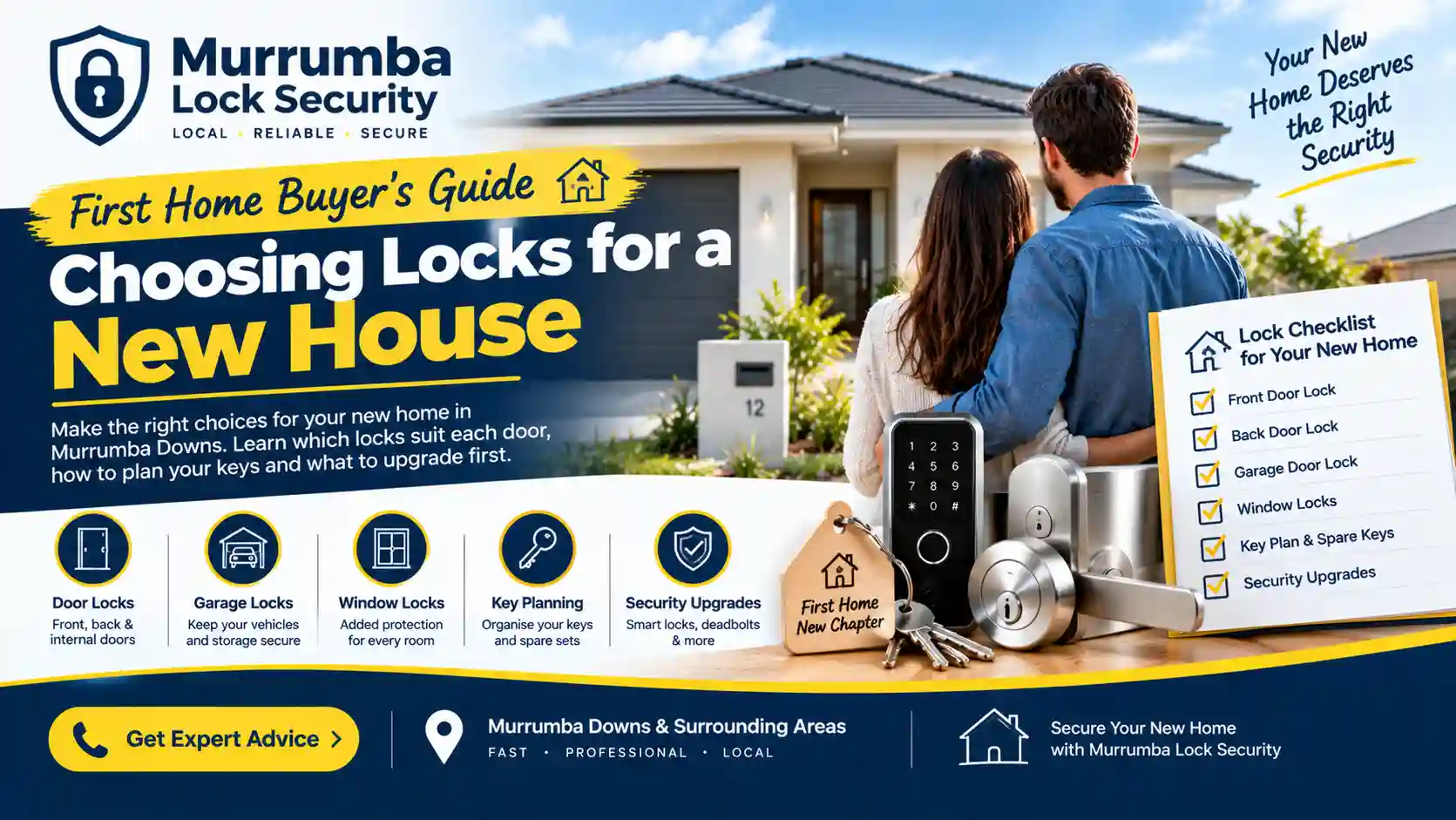
Buying your first home is a huge milestone, and a brand-new house comes with a long list of decisions. Flooring, fixtures, colours and landscaping tend to grab most of the attention, while locks quietly slip down the list. Yet the locks on your doors will be used every day for years, and they play a big part in how safe and comfortable your home feels.
This guide is written for first home buyers choosing locks for a new house in Murrumba Downs. It explains what builders commonly supply, where an upgrade is worthwhile, which lock types suit which doors, and how to plan your keys sensibly. You don’t need technical knowledge to make good decisions. You just need to know what to look for and what to ask.
Why Lock Choices Matter More Than You Think
A lock is the most used security feature in your home. You’ll operate your front door lock several times a day, and it needs to work reliably in the rain, in the dark and when your hands are full. A poorly chosen lock can be frustrating to use and easier to defeat. A well-chosen one fades into the background and simply works.
Locks are also relatively inexpensive compared with the rest of a new build, which means a modest investment can lift your home’s security and convenience significantly. The earlier you think about it, the easier and cheaper it tends to be.
What Builders Typically Supply
Builders and developers have to manage costs across the entire house, so they often fit standard-grade hardware that does the basics. These locks usually work fine when they’re new, and they meet normal expectations for a new home. But they aren’t always the strongest or most convenient option, and they’re rarely selected with your specific household in mind.
That doesn’t mean something is wrong. It simply means a new house is a good time to ask what has been fitted, and whether any doors would benefit from an upgrade. Your builder or sales representative can usually tell you which locks are included, and whether upgraded options are available before handover.
Which Doors Need the Most Attention?
Not every door needs a premium lock, so it helps to prioritise.
- Front door. The main entry and the one you’ll use most. It deserves a quality lock that suits how you live.
- Back door and laundry door. Often less visible from the street, which makes them attractive to opportunists. They deserve strong locks too.
- Sliding doors. A common weak point. Make sure they have a secure, purpose-built lock.
- Internal garage door. If your garage connects to the house, this door is effectively an external door.
- Side gates and outbuildings. These protect your outdoor areas and any tools or equipment you store there.
- Windows. Check that latches and locks are working, and consider upgrades for ground-floor and easily accessible windows.
The Main Types of Locks, Explained Simply
Deadbolts
A deadbolt uses a solid bolt that slides into the door frame when locked. It’s operated by a key, a thumb turn, or both, and it’s widely regarded as one of the strongest options for external doors. Many people pair a deadbolt with a standard handle set for the best of both worlds.
Keyed Handle Sets
These combine the door handle and key lock in one unit. They’re convenient and common in new homes, but on their own they usually offer less resistance than a dedicated deadbolt.
Mortice Locks
A mortice lock sits inside a pocket cut into the edge of the door. These are strong, durable and well suited to certain door types, though they need a door thick enough to house them.
Smart and Keypad Locks
These let you unlock the door with a code, card, fingerprint or phone. They’re popular with busy households because there’s no key to lose, and they make it easy to give temporary access to visitors. Choose a reputable model with a mechanical backup.
Sliding Door Locks
Sliding doors need locks designed for their mechanism, such as hook locks, latches or additional security bars. A standard lock won’t suit them.
Think About Your Keys, Not Just Your Locks
How your keys are arranged matters as much as what locks you choose.
- Keyed alike. One key opens several locks, such as the front door, back door and garage entry. It’s convenient, but if that key is lost, all of those locks are affected.
- Individual keys. Each lock has its own key. It’s more to carry, but a lost key only affects one lock.
- Master key systems. Useful in larger or more complex properties, where different people need different levels of access.
For most first home buyers, a keyed-alike setup for the main external doors is a practical balance. A locksmith can help you design it.
Match the Lock to Your Lifestyle
The best lock for you depends on how you live. Ask yourself a few questions.
- Do you or your household often misplace keys? A keypad or smart lock could solve this.
- Do you have young children, or plan to? You’ll want locks that are easy to operate from the inside and keep hazards secure.
- Do you work irregular hours or travel? Remote access and temporary codes can be very helpful.
- Will tradespeople, cleaners or visitors need access? Flexible access control makes this easier.
- Do you prefer simplicity? A good mechanical deadbolt with fewer moving parts may suit you best.
Don’t Forget the Door and Frame
A strong lock is only as good as the door and frame it’s attached to. Check that the door is solid and well hung, the frame is firm and the strike plate is properly fixed. Longer screws in the strike plate and hinges are a simple way to strengthen a door. If a door or frame has been damaged or poorly fitted, it’s worth raising this with your builder before handover.
Check Your Insurance Requirements
Home insurance policies often include requirements for locks on external doors and windows. If your locks don’t meet these requirements, it could affect a claim after a break-in. Read your policy, or ask your insurer, before you finalise your lock choices, so you know exactly what’s expected.
Plan Your Budget Sensibly
A new house comes with plenty of expenses, so it’s worth prioritising where to spend. A sensible approach is to focus on the essentials first.
- First priority: A quality deadbolt or secure lock on the front door, and secure locks on the back and garage entry doors.
- Second priority: Secure sliding doors and window locks.
- Third priority: Keyless or smart entry on the doors you use most.
- Later: Extra upgrades, such as additional smart devices or specialised storage.
You can always add to your setup over time, but it makes sense to get the basics right from the beginning.
Mistakes First Home Buyers Often Make
- Assuming the standard locks are the best available. They may be perfectly adequate, but they’re rarely the best option for your situation.
- Ignoring back and side doors. They’re commonly overlooked, and they’re often less visible to neighbours.
- Buying a cheap smart lock online. Quality varies widely, and a poorly installed lock can cause ongoing problems.
- Forgetting about construction-era keys. During a build, many people may have had access. Rekeying after handover is a sensible step.
- Choosing locks that can trap people inside. External doors should open easily from the inside without a key.
Why Professional Installation Pays Off
Even an excellent lock can underperform if it’s fitted badly. A locksmith makes sure that the lock is aligned properly, the bolt extends fully into the frame, the strike plate is secure and the door closes smoothly. They’ll also test every key, confirm that the lock works as it should and advise on how to look after it. In a new home, careful installation also protects the finish of your brand-new doors.
Start Your First Home With Confidence
You don’t need to be an expert to choose locks well. Find out what your builder has fitted, focus first on your front door, back door, sliding doors and garage entry, think about how your household actually lives, and make sure the door and frame are up to the job. A few thoughtful decisions at the start will give you a home that’s secure, convenient and ready for everything that comes next in your first Murrumba Downs house.