
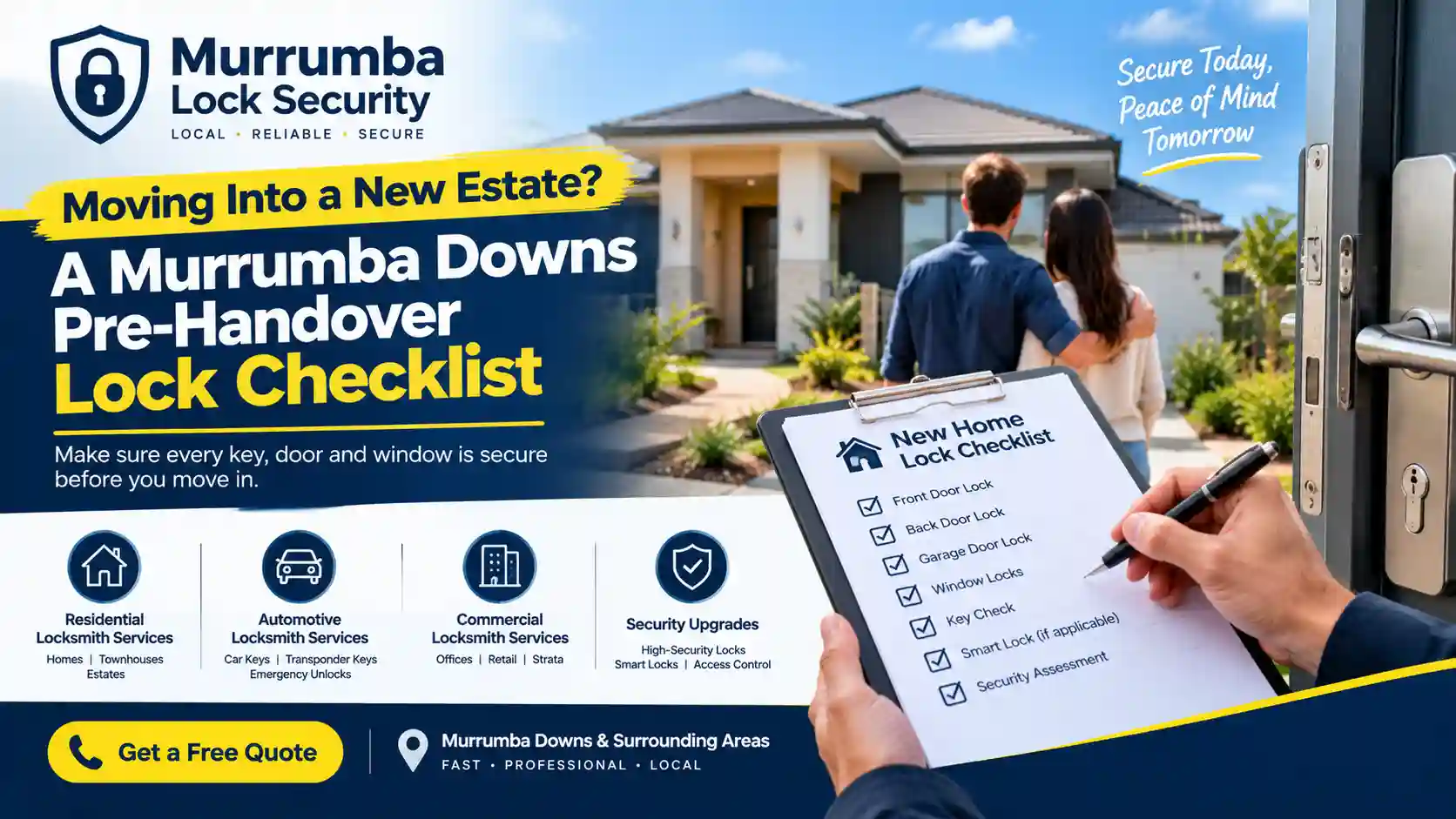
Handover day is exciting. After months of watching your home go up, you finally get the keys, walk through the front door and start planning where the furniture goes. In the middle of all that excitement, locks are easy to overlook. Yet the locks and keys on your new home are the foundation of its security, and handover is the best moment to make sure they’re right.
This checklist is written for new homeowners in Murrumba Downs and the surrounding estates. It explains what to ask your builder, how to check each lock during your walk-through, which issues are common in new builds, and what to do about keys that may have passed through many hands during construction. Work through it before you move in, and you’ll start with a home that is secure, smooth to use and properly documented.
Why Locks Deserve Attention at Handover
A new home is never “unlocked” in the way an older home might be, but it has a different kind of key history. During construction, a surprising number of people need access: the builder, site supervisors, a range of trades, inspectors, cleaners and sometimes sales or marketing staff. Each may have used temporary locks, shared keys or a lockbox code during the build.
Handover is when responsibility for the property passes to you. It’s the natural time to confirm exactly which keys exist, whether any construction-era access has been closed off, and whether every lock works the way it should. Raising problems at this stage is also much easier than chasing them after you’ve moved in.
Questions to Ask Your Builder or Agent Before Handover
A few straightforward questions can save you time and uncertainty.
- How many keys will I receive for each lock? Ask for the full set, including keys for the front door, back door, garage internal door, windows, sliding doors, letterbox and any outbuildings.
- Were temporary or construction locks used during the build? If so, ask whether they’ve been replaced with the permanent locks, and whether any construction keys or lockbox codes are still active.
- Are the locks keyed alike? Some homes have one key for several doors, while others require a separate key for each. Knowing this tells you how many keys to carry and what to rekey later.
- What hardware has been fitted? Ask for the brand and model of the main locks, and whether any manuals or warranty details are available.
- Is there a key register or schedule? A written record of the keys supplied helps you confirm that nothing is missing.
- How are defects reported? Find out the process and timeframe for raising issues with locks and doors after handover.
Get the answers in writing where you can. If the builder holds spare keys or a master key for the property, ask whether they’ll be handed over or destroyed.
The Room-by-Room Lock Walk-Through
When you inspect your new home, take a few extra minutes to test every lock and latch. Carry the keys with you and check each one in turn.
Front Door
- Does the key turn smoothly, without sticking or needing force?
- Does the deadbolt, if fitted, extend fully into the frame?
- Does the door close squarely without needing a hard push?
- Is the handle firm, with no looseness or rattle?
- Can you lock and unlock from the inside without a key, so you can exit quickly in an emergency?
Back Door and Laundry Door
Rear doors are often less visible from the street, so they deserve the same attention as the front. Test the locks and latches and check that the door sits properly in its frame.
Sliding Doors
Sliding doors use different locking mechanisms from hinged doors. Check that the lock engages fully, the door glides without catching, and any additional locks or security pins are included. Look at the track for debris left over from construction.
Internal Garage Door
The door from the garage into the house is a key point of access. Test its lock and latch, and confirm that it closes and locks reliably.
Windows
Operate every window latch and lock. Make sure each closes tightly and locks without force. Ground-floor windows and those near entry points deserve particular care.
Side Gates, Letterbox and Outbuildings
Don’t forget the smaller items. Check that the side gate latch and lock work, that the letterbox key opens its box, and that any shed or storage area locks properly.
Common Lock Issues in New Builds
New homes are well built, but a handful of small problems come up often. Most are simple to fix, as long as you spot them early.
- Misaligned strike plates. If a bolt or latch doesn’t line up with its plate in the frame, the door may be hard to lock or may not lock securely.
- Paint or debris on hardware. Overspray and dust can make keys stiff and latches sticky.
- Sticking doors. New timber and frames can shift slightly as the home settles, which can affect how a door closes and how a lock engages.
- Loose handles and fittings. Screws sometimes need tightening after transport and installation.
- Stiff sliding door locks. New tracks and mechanisms may need adjustment to work smoothly.
- Missing or mismatched keys. It’s easy for a key to go missing in the rush of handover, so count them against your list.
Make a note of any problem, take a photo and raise it through the builder’s defect process. Small adjustments are usually quick, but they’re best recorded early.
Dealing With Construction-Era Keys
Even when everything is handed over correctly, there’s no way for you to know how many copies of the construction keys were cut or who still holds them. This is why many new homeowners choose to have their locks rekeyed or replaced soon after moving in.
Rekeying changes the internal workings of the existing lock so that old keys no longer work, without needing new hardware. It’s a quick, cost-effective way to make sure that only the keys you hold will open your home. If a lock is poor quality or damaged, replacement may be the better choice.
Security Upgrades Worth Considering at Move-In
Standard hardware in new homes is generally functional, but you may want to improve on it. Common upgrades include:
- A quality deadbolt on external doors. It adds strength where it matters most.
- Window locks and restrictors. These secure windows while still allowing ventilation.
- Keyless or smart entry. A keypad or smart lock removes the need to carry a key, and makes it easy to manage access for family and visitors.
- Better outdoor lighting. Sensor lights around entry points make it harder for anyone to approach unnoticed.
- A secure garage setup. Check that the internal garage door and roller door are properly secured, particularly if you keep tools or vehicles inside.
You don’t have to do everything at once. Focus first on the doors that matter most, and build from there.
Don’t Forget Safety and Emergency Exit
Security should never get in the way of safety. In an emergency, everyone in the house needs to be able to get out quickly. Make sure that external doors can be opened from the inside without a key, particularly when children or elderly family members live in the home. Locks that require a key on both sides can trap people inside and are best avoided in most homes.
Set Up Good Key Habits From Day One
A secure home depends on how keys are managed as well as the locks themselves.
- Make a simple key register. Record how many keys exist for each lock and who holds them.
- Avoid hiding keys outside. Under a pot or mat is the first place anyone looks.
- Leave a spare with someone you trust. A neighbour or family member can save you from a lockout.
- Label keys carefully. Use a code, not your address.
- Review access when circumstances change. If someone moves out or a tradesperson no longer needs access, update your keys or codes.
A Quick Pre-Handover Checklist You Can Print
- Confirm the number of keys for every lock against the builder’s list.
- Ask whether temporary construction locks or lockbox codes were used, and that they’re no longer active.
- Test the front, back, laundry, sliding and internal garage doors.
- Operate every window latch and lock.
- Check side gates, the letterbox and any outbuildings.
- Look for stiff keys, misaligned latches and loose handles.
- Photograph and record any defects, and report them through the builder.
- Plan to rekey or replace locks soon after moving in.
- Make sure external doors can be opened from inside without a key.
Start Your New Home on Solid Ground
Handover is one of the few moments when you can take a calm, clear look at every lock in your home before life gets busy. A little attention now means fewer problems later, and the confidence that your new home in Murrumba Downs is secure from the day you move in. Check every lock, count every key, record anything that isn’t right, and take control of access from the very start.